The Current State of Azerbaijan’s Economy and Its Future Prospects
Azerbaijan’s economy has been undergoing significant changes in recent years. Although revenues from the oil and gas sector continue to play a major role in the country’s economic development, the expansion of non-oil industries, digitalization, and new investment opportunities are becoming key priorities of its future economic policy.
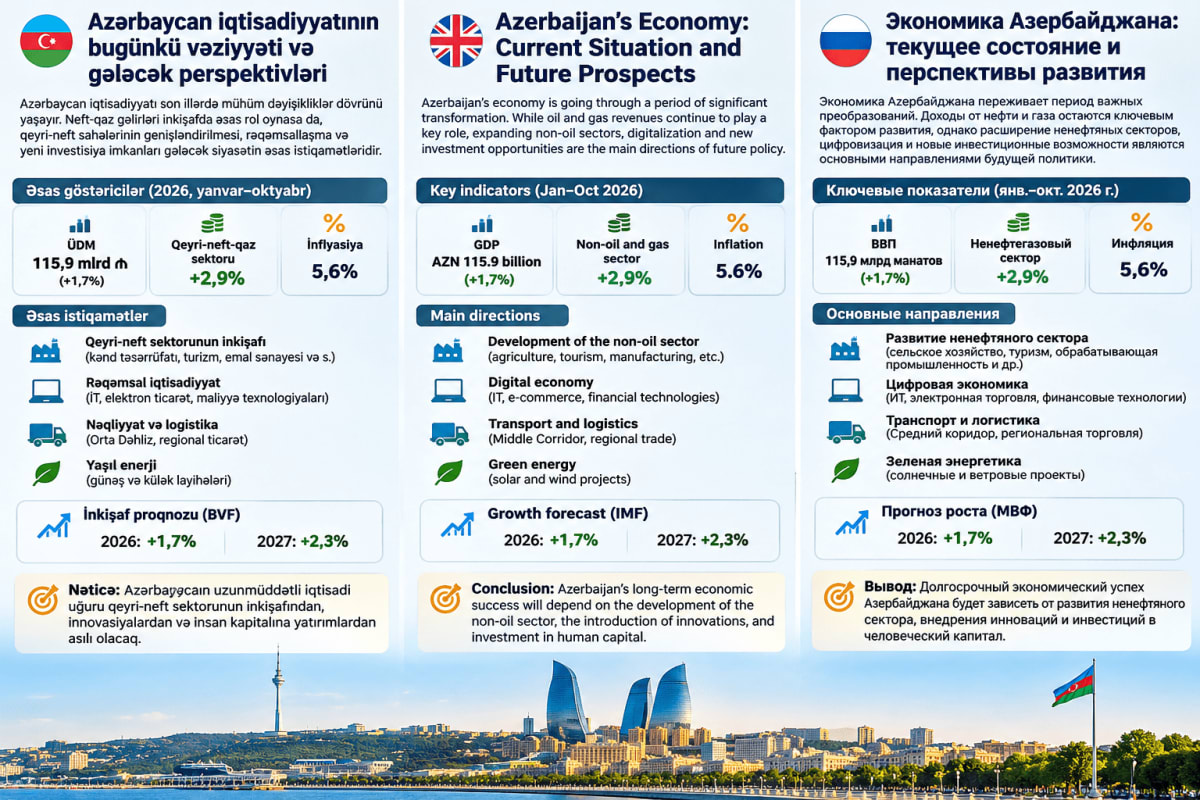
Azerbaijan’s economy has been undergoing significant changes in recent years. Although revenues from the oil and gas sector continue to play a major role in the country’s economic development, the expansion of non-oil industries, digitalization, and new investment opportunities are becoming key priorities of its future economic policy.
The Current Economic Situation
Azerbaijan is one of the major economic centers of the South Caucasus. The country’s rich energy resources have long been a primary source of economic growth, infrastructure development, and government revenue.
In January–October 2026, Azerbaijan’s gross domestic product (GDP) reached AZN 115.9 billion, representing a 1.7% increase compared to the same period of the previous year. The non-oil and gas sector recorded growth of 2.9%.
Although these figures indicate continued economic development, reducing dependence on oil revenues remains one of the country’s main challenges. Agriculture, tourism, transportation, information technology, and manufacturing are particularly important in this regard.
Inflation and Purchasing Power
One of the key indicators of economic development is the well-being of the population. In recent years, rising food and service prices have affected household budgets.
Average inflation reached 5.6% in January–October 2026. While increasing wages and other sources of income is important, the main priority is to protect the population’s real purchasing power.
Therefore, maintaining price stability, creating new jobs, and supporting entrepreneurship remain essential economic policy objectives.
The Non-Oil Sector and Digital Economy
Azerbaijan’s long-term economic development largely depends on strengthening its non-oil sector. Supporting small and medium-sized enterprises, increasing domestic production, and expanding export opportunities can enhance economic resilience.
At the same time, digital technologies are creating new opportunities for growth. The development of artificial intelligence, e-commerce, financial technologies, and software services could strengthen Azerbaijan’s competitiveness in international markets.
Successful digital transformation requires not only investment in technological infrastructure but also the development of skilled professionals and support for innovative businesses.
Future Economic Prospects
Azerbaijan’s strategic geographical location offers significant opportunities to become an international transportation and logistics hub. The development of the Middle Corridor, expansion of regional trade relations, and new infrastructure projects could provide additional momentum for economic growth.
Meanwhile, the expansion of solar and wind energy projects creates important opportunities for diversifying the energy sector.
According to International Monetary Fund forecasts, Azerbaijan’s economy is expected to grow by 1.7% in 2026 and 2.3% in 2027. These projections suggest continued economic growth while highlighting the importance of structural reforms.
Azerbaijan’s economy is entering a new stage of development. Although energy resources, strategic geographical advantages, and existing infrastructure strengthen the country’s economic potential, long-term success will depend on the development of the non-oil sector, technological innovation, and investment in human capital.
Azerbaijan’s economic future will be determined not only by its natural resources but also by its ability to transform those resources into sustainable development and greater prosperity for society.