Construction Begins on Key Components of the World's Largest Neutrino Detector
Engineers from the United States and Europe have begun constructing two massive cryostats, key components of the DUNE project, one of the world's largest neutrino detector experiments.
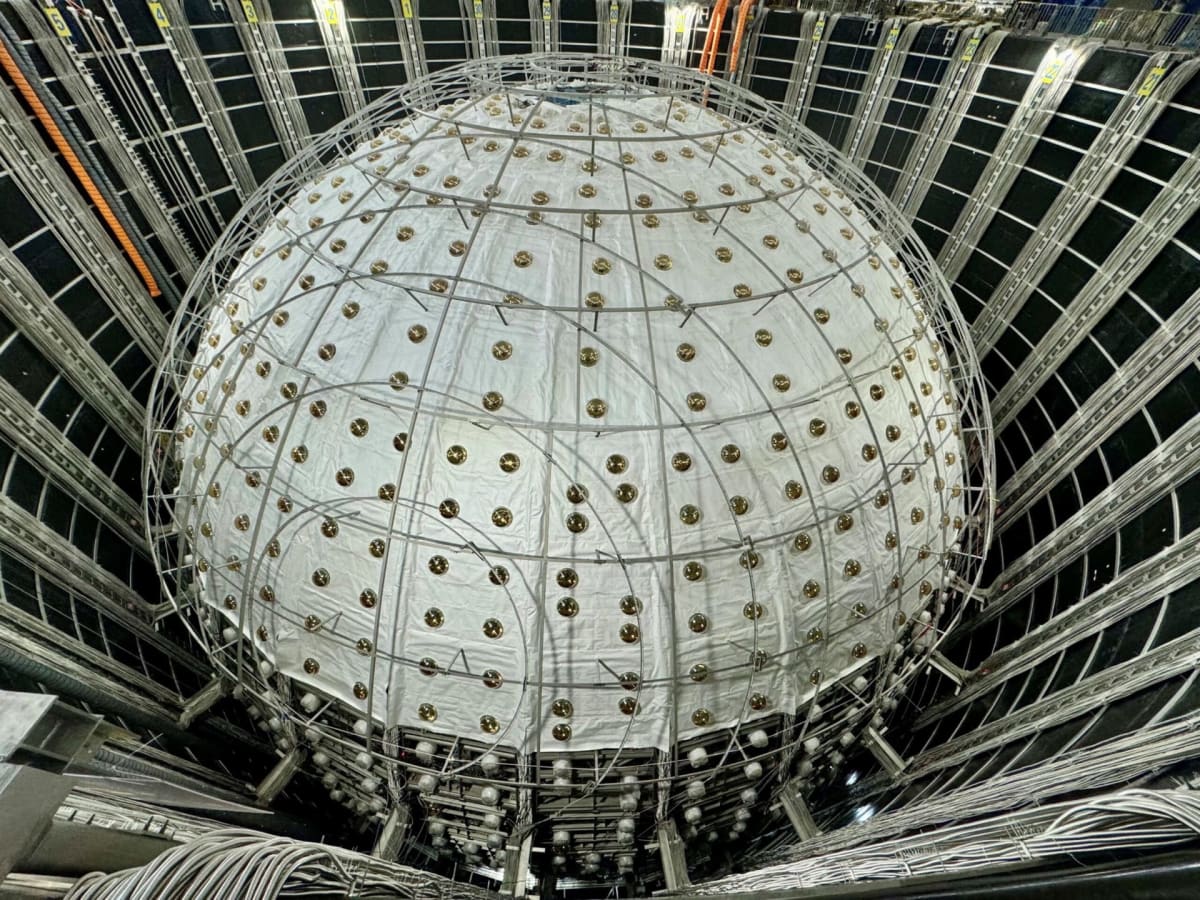
Engineers from the United States and Europe have begun constructing two massive cryostats, key components of the DUNE project, one of the world's largest neutrino detector experiments. The facilities are designed to hold more than 17,000 tonnes of liquid argon.
According to the press service of the European Organization for Nuclear Research (CERN), the cryostats will be among the main components of the Deep Underground Neutrino Experiment (DUNE).
Norbert Holtkamp, director of Fermilab, said that implementing the DUNE project was one of the laboratory's top priorities. He noted that the project would not only expand scientific understanding of the universe but also pave the way for the development of new technological solutions.
According to CERN, the cryostats will be monumental engineering structures comparable in size to Boeing 747 aircraft. Their construction will require more than 6,200 tonnes of specially designed steel, 2,600 steel beams and a wide range of high-tech equipment. Most of the necessary materials and equipment have already been transported to the construction site, located 1.5 kilometres underground.
The cryostats will protect the neutrino detectors from external radiation and provide the conditions necessary for their operation. The liquid argon stored inside them will make it possible to detect neutrino interactions.
CERN specialists are also playing a major role in the project. This represents one of the organization's most significant contributions to a scientific project outside Europe. CERN previously played an important part in developing ProtoDUNE, smaller prototype detectors designed to test technologies for the DUNE experiment.
According to the current schedule, construction of the cryostats and other key components is expected to be completed in 2029. Assembly of the detectors is planned to be finalized in 2030, with scientific operations scheduled to begin in 2031.
With a budget exceeding $3.2 billion, the DUNE project is being developed at the Sanford Underground Research Facility (SURF) in South Dakota, USA. The experiment will consist of two detectors filled with liquid argon and installed approximately 1.5 kilometres below the Earth's surface.
Scientists hope that DUNE will enable them to obtain more precise information about the mass and properties of neutrinos. The experiment could also help explain why matter dominates over antimatter in the universe. Its findings may provide answers to some of the most fundamental questions in modern physics.