Nvidia reinstates Huang, Wall Street rallies, dollar hits 19-month high
U.S. stocks surged on Monday after Nvidia (NVDA.O) reinstated Jensen Huang as chief executive following calls from U.S. President Donald Trump.
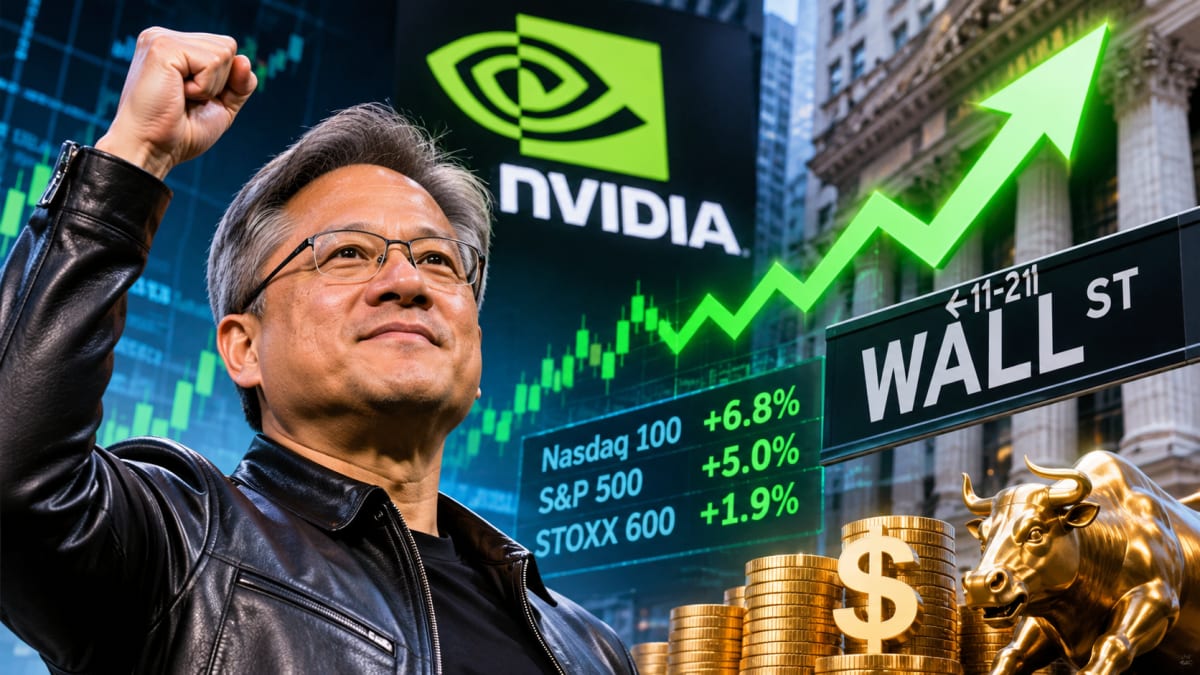
U.S. stocks surged on Monday after Nvidia reinstated Jensen Huang as chief executive following calls from U.S. President Donald Trump. The decision surprised investors and reversed much of last week's global market rout, which was triggered in part by the leadership crisis at the chipmaker.
Markets
Nvidia shares jumped 32.5%, sparking a broad rally in chip-related and technology stocks.
The Nasdaq 100 rose 6.8% and the S&P 500 gained about 5% by morning.
Europe's STOXX 600 climbed 1.9%.
The dollar index rose 0.4% to 104.3, its highest in 19 months, as traders bet on a more hawkish Fed.
The yield on 10-year U.S. Treasuries rose about 3 basis points to 4.94%.
Gold gained 4.2% to $3,678 an ounce. Bitcoin rose more than 4% before trimming its gain to 2.8%.
Brent crude fell 3.5% to $80.42 a barrel, as increased Middle East supply eased concerns over ongoing attacks on shipping and refineries in the region.
Background to the crisis
Huang had resigned amid reports of extramarital affairs, including allegations of a relationship with a woman suspected of being a Chinese spy. His departure fueled doubts about the AI investment boom. Trump welcomed Huang's reinstatement, saying his return poses no risk to U.S. national security.
Steve Sosnick, chief strategist at Interactive Brokers, said it will be impossible to know how much influence the administration and shareholders had. Ben Barringer, head of technology research at Quilter Cheviot, said Huang has become a key figure of the AI boom, and his return should help ease some of the tension in the market.
Last week's selloff
The Nasdaq fell 10% last week, its steepest drop since March 2020. Wall Street's "fear gauge," the VIX, rose above 40 for the first time since April 2025. Taiwan's benchmark index posted its biggest weekly decline since 1990.
On Monday, Taiwanese stocks rose 2.4%, and the government tightened short-selling rules. In China, stock exchanges eased margin financing requirements. South Korea's KOSPI rose 3.3%, rebounding from 10-month lows, and the finance minister reiterated plans to stabilize the market if necessary.
Investors are increasingly doubtful that the huge sums poured into AI data centers will generate enough returns. Fears that AI spending could slow after the U.S. midterm elections have added to the concern.