German government raises 2026 GDP growth forecast to 1.3%
The German economy has proven more resilient than expected despite the energy shock caused by the war with Iran. The government has raised this year's growth forecast from 0.5% in April to 1.3%.
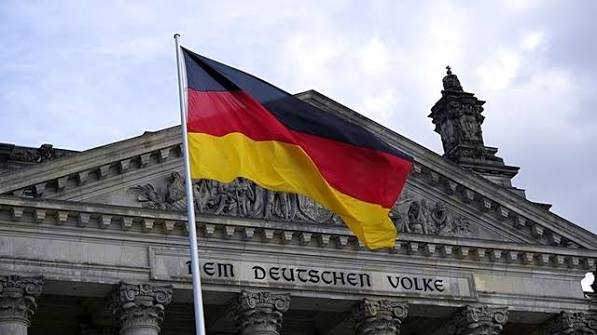
The German economy has proven more resilient than expected despite the energy shock caused by the war with Iran. The government has raised this year's growth forecast from 0.5% in April to 1.3%.
On Thursday, the German government announced that it had roughly doubled its 2026 economic growth forecast. The main reason for the revision was stronger exports. Europe's largest economy is also reported to be benefiting from the global artificial intelligence boom.
The updated forecasts may ease the pressure on Chancellor Friedrich Merz, who has been criticized for not doing enough to revive an economy that has stagnated for a long time.
Economy Minister Katherina Reiche said, while presenting the forecasts, that the German economy had proven more resilient than expected in the spring.
The minister said at a press conference: "Despite geopolitical uncertainty, the global energy price shock, the closure of the Strait of Hormuz and the imposition of tariffs, the economy has been able to enter a recovery trajectory."
In recent years, the German economy has stagnated amid weak foreign demand, high energy costs, US tariffs and competition from China. However, the latest indicators confirm that a recovery has begun.
According to Reiche, in the months after the war with Iran began, foreign importers rushed to stock up on German products, including steel, fertilizers and aluminum. This supported economic growth.
The government expects exports to grow by 3.7% this year, after falling by 0.9% in 2025.
The minister said German suppliers are also benefiting from the global trend toward investment in artificial intelligence. The boom in data center construction has led to a sharp increase in orders for German companies producing lasers, semiconductor equipment and cooling systems.
The Ministry of Economy has also raised its 2027 growth forecast from 0.9% to 1.1%. Increased government spending on defense and infrastructure is expected to support the economy in the coming years. In 2028, growth is forecast to slow to 0.6%.
The ministry warned that consumer spending will remain weak because rising energy prices are increasing the cost of living. Inflation in Germany reached 3.3% in September, its highest level in about three years.
According to the forecasts, inflation will average 2.7% this year and 3.0% in 2027. Real consumer spending is expected to grow by only 0.3% and 0.5%, respectively.
As in other countries, fuel prices in Germany rose sharply after the war involving Iran. Last week, the government announced a temporary reduction in fuel taxes to partially offset drivers' higher costs.
The government's official 2026 growth forecast is in line with the latest estimates of Germany's leading economic research institutes.