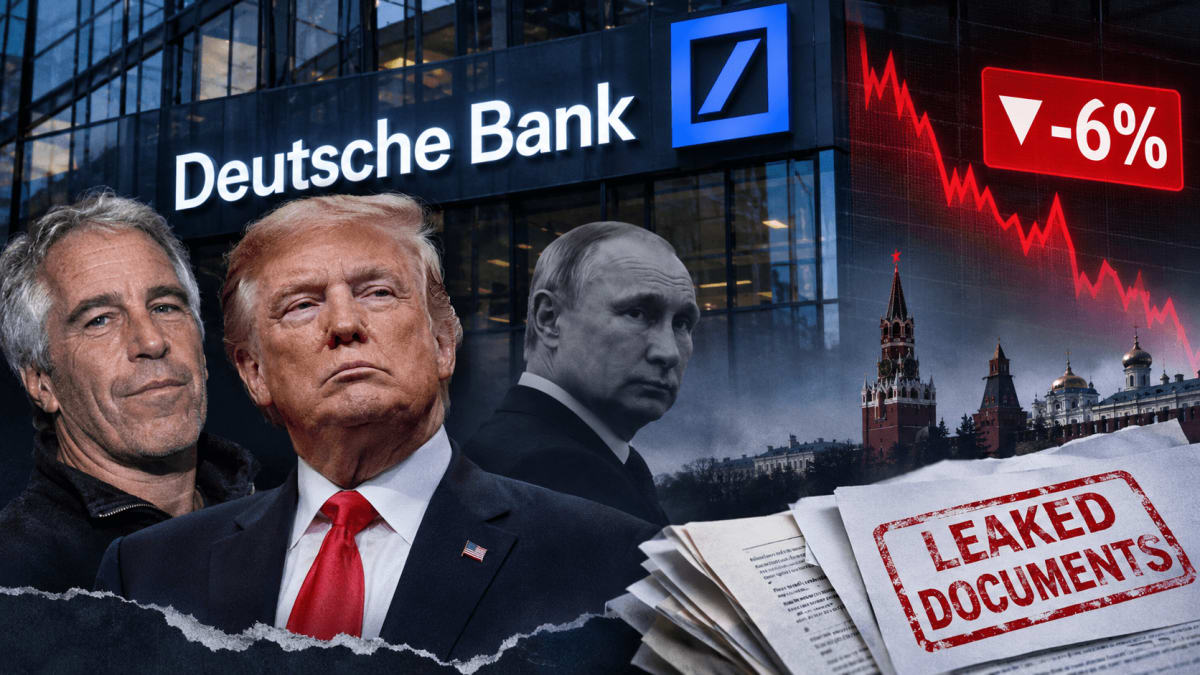
Deutsche Bank Shares Fall More Than 6% After Reports on Epstein Payments and Russia Dealings
Media reports based on leaked internal records have reignited scrutiny of the German lender’s past dealings with clients. The bank says the matters date back “many years”
Media reports based on leaked internal records have reignited scrutiny of the German lender’s past dealings with clients. The bank says the matters date back “many years”
Deutsche Bank shares fell more than 6% on Tuesday after media reports based on leaked internal records about past dealings with clients, including Russian oligarchs, U.S. President Donald Trump and convicted sex offender Jeffrey Epstein. It was the bank’s sharpest share price drop since April 2025.
The Bank’s Response
In response to the reports, Deutsche Bank said the matters described go back “many years”, in some cases up to twenty. The bank stressed that it has since strengthened its controls.
“Deutsche Bank is a different bank today and is focused on executing its strategy. That strategy has proven successful, as shown by record profits in 2025 and in recent quarters,” the bank said in a statement.
The bank also noted that, given the “legacy nature” of these matters, any potential financial impact is not expected to be material.
What the Leaks Contain
The reports are based on the work of an international consortium of journalists and were published by outlets including Der Spiegel, the Financial Times, the New York Times and Le Monde. According to the New York Times, the material consists of 15 million leaked records, including emails and meeting minutes. Reuters was unable to immediately verify the reports independently.
The documents were obtained by two journalists, from India and South Africa respectively, and analyzed by a consortium of more than 200 journalists. The reports shed light on the bank’s relationships with clients such as Trump and Epstein, as well as its operations in Russia before the invasion of Ukraine.
The Financial Times reported that in 2017, during Trump’s first term as president and while he was still a Deutsche Bank client, the bank accidentally sent his tax document to another client’s accountant.
The leaks also show that, despite doubts among some of the bank’s managers, the institution was keen to do business in Russia, including with high-ranking oligarchs, until the invasion of Ukraine began in February 2022.
Analyst: Nothing New
Jochen Stanzl, chief market analyst at Consorsbank, said investors are mainly worried that the reports could weaken the position of CEO Christian Sewing.
“But in my opinion, the articles essentially don’t offer much that is new,” he said.
Rebuilding Reputation Remains Difficult
For years, Deutsche Bank has been trying to rebuild its reputation after penalties related to anti-money laundering failures and other compliance shortcomings. Sewing, CEO since 2018, has restored the bank’s profitability, but compliance violations have resurfaced from time to time.
One of the most recent incidents occurred earlier this year, when documents released by the U.S. Department of Justice detailed the bank’s client relationship with Epstein.
A member of the European Parliament has called on Sewing to appear before the body to answer questions.