FCC Approves SpaceX Plan to Launch 1 Million Satellites for Space-Based Data Centers; Scientists Skeptical
The Trump administration on Wednesday gave SpaceX the green light to launch 1 million satellites that it says will serve as data centers in space. The move is a long-sought goal of Elon Musk's rocket company, and it has drawn both skepticism and excitement among scientists.
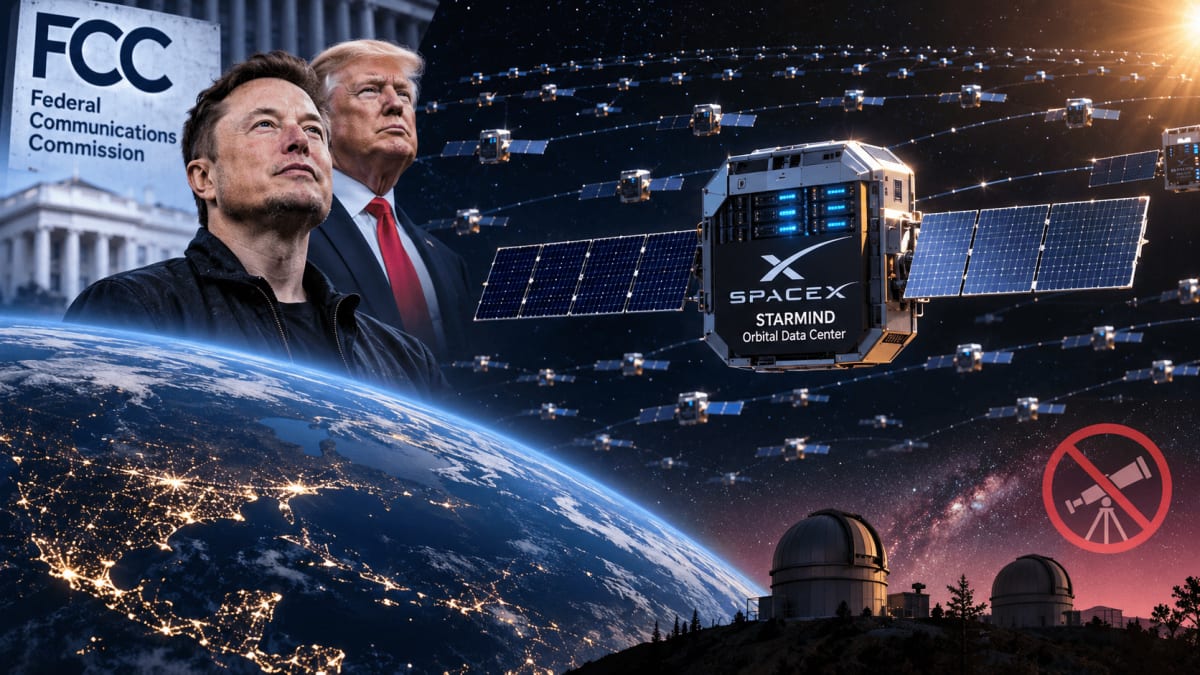
The Trump administration on Wednesday gave SpaceX the green light to launch 1 million satellites that it says will serve as data centers in space. The move is a long-sought goal of Elon Musk's rocket company, and it has drawn both skepticism and excitement among scientists.
The U.S. Federal Communications Commission (FCC) called the authorization a historic first amid the race for artificial intelligence. According to the commission, one million "orbital compute modules," which make up a data center constellation called "Starmind," will process vast amounts of data to be used on Earth and bring humanity closer to harnessing "the full power of the sun."
FCC Chairman Brendan Carr, appointed by Republican President Donald Trump, said in a statement: "America is leading the world into the age of superintelligence." He added that Wednesday's step "opens a bold new frontier."
Under the longer authorization order published by the FCC, the company must deploy at least one authorized space station by 2033 and then gradually add more by 2040. Musk welcomed the decision on social media.
Scientists Are Skeptical
The world's richest man has long promised to build giant, solar-powered data centers in space to help run AI tools on Earth. But scientists and industry experts have pointed to major technical and financial obstacles, as well as a number of environmental concerns.
Astrophysicist and author Adam Becker called the prospect of sending one million satellites into space to build data centers a "fantasy." "It's not going to happen," he said Wednesday.
Astronomers Are Alarmed
In a statement on Wednesday, the American Astronomical Society (AAS) said it was "disappointed and bewildered" by the FCC's decision. The organization said SpaceX's proposal to place data centers in low Earth orbit would undermine decades of federal investment in astronomical facilities, as well as the ability of astronomers and the public to enjoy and study the night sky.
The AAS noted that the proposed constellation involves larger (and therefore brighter) objects in far greater numbers, and that these satellites would appear as extremely bright objects in the night sky for longer periods.
Becker echoed this view: "It's also naked-eye pollution of the night sky."