Xi and Putin criticize Western trade and sanctions policies ahead of meeting with Trump
At the APEC summit in China, the Chinese leader spoke out against protectionism, while the Russian president claimed sanctions have been ineffective
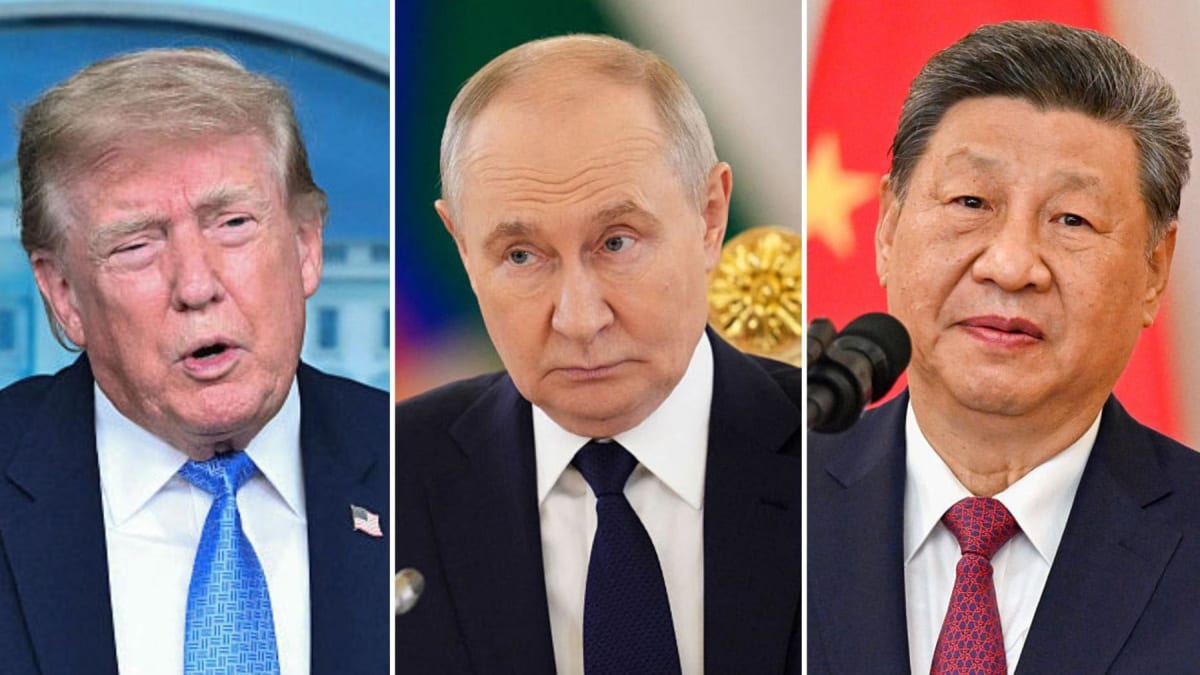
At the APEC summit in China, the Chinese leader spoke out against protectionism, while the Russian president claimed sanctions have been ineffective
Chinese President Xi Jinping pledged on Wednesday to oppose trade protectionism, while Russian President Vladimir Putin criticized Western sanctions. Both leaders spoke at the Asia-Pacific Economic Cooperation (APEC) summit in Shenzhen, a technology hub in southern China.
On Thursday, Xi, Putin and U.S. President Donald Trump are expected to hold a trilateral meeting in Shenzhen. The agenda includes Russia’s war with Ukraine, the U.S. confrontation with Iran, and issues such as trade, artificial intelligence and nuclear weapons. Before traveling to China, Trump met with key U.S. regional allies in Manila.
In his speech to business leaders, Xi sought to present China as a stable partner on the global stage. He called for supporting a multilateral trading system based on World Trade Organization rules, free and open trade and investment, and safeguarding the stability of global supply chains.
Xi also said the world’s second-largest economy will lower tariffs, open its markets further, and continue investing in its industrial capacity and developing new technologies. He said China will oppose protectionism and unilateralism.
The speech comes after Washington announced additional restrictions on China’s access to advanced AI chips from companies such as Nvidia. The move could complicate the fragile trade truce with Beijing. China has vowed to retaliate.
According to George Chen, a partner at The Asia Group, Xi’s message will resonate in many Global South countries and strengthen Beijing’s efforts to contrast its technology strategy with Washington’s.
Western trading partners criticize China for policies that support its manufacturing sector at the expense of consumers, which they say have pushed its annual trade surplus above $1 trillion. Beijing says its growth model suits its economy. Washington and Brussels are concerned about China’s dominance in supply chains and say its policies threaten industries and jobs.
Speaking after Ukraine destroyed the Kerch road bridge connecting Crimea with Russia, Putin called Western powers “former hegemons.” He said Europe is in “humiliating decline” and that sanctions imposed over its involvement in Ukraine have backfired, making Russia stronger.
According to Putin, traditional tools such as economic dominance and coercion have lost much of their intimidating power. “Sanctions, tariffs and export restrictions may still have some deterrent effect, but they are unable to stop growth, let alone crush rivals’ economies,” he added.
In a later bilateral meeting, Xi and Putin praised each other for a partnership that works “stably and positively on the international stage” and pledged to do more to advance a “multipolar world.”
The trilateral meeting has been compared to the 1945 Yalta Conference between the U.S., Britain and the Soviet Union, which formalized spheres of influence and laid the groundwork for the post-World War II order. These comparisons worry smaller economies, especially leaders in Europe and Asia, who fear that the major powers will disregard their interests.
The Kremlin called the comparisons “games of political scientists,” but said the meeting would have a major impact on global issues. Beijing said the trilateral meeting would promote world peace. Putin called the world “turbulent” but said differences can be resolved by “sitting at the table.” He said he expects “great potential benefit” from the meeting.
In Manila, Trump pledged to deepen defense cooperation with the Philippines amid growing confrontation with Beijing over disputed territories in the South China Sea. He also floated the possibility of meeting North Korean leader Kim Jong Un in China, though this has not been confirmed.
Trump’s Asia trip is his first since the Republican Party’s defeat in the midterm elections. Claims involving Jensen Huang and an alleged Chinese spy are also adding to tensions. Even so, most analysts expect U.S.-China relations to remain relatively stable. After Thursday’s meeting in Shenzhen, Trump and Xi will meet for the fourth time this year at the G20 gathering in Miami in December.
On Tuesday, Taiwan and Japan recorded Russian aircraft entering their airspace.